Empresas Premium


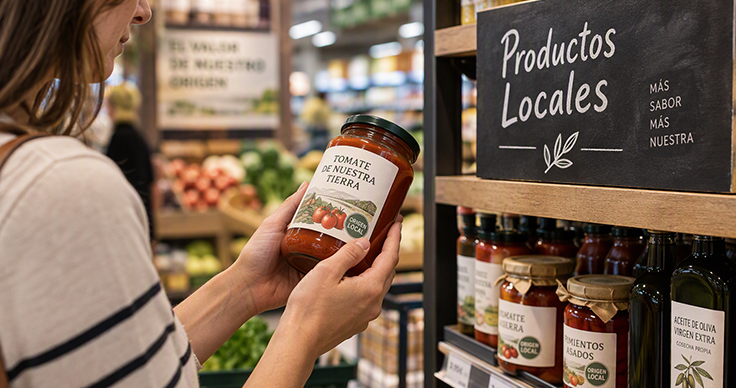
A shopper picks up two jars of tomato sauce. The ingredients are nearly identical, the price is close enough not to matter, and yet one goes in the cart and the other stays on the shelf. Increasingly, the deciding factor isn´t the product itself. It´s the story behind it.
Price and functionality used to be the two factors that mattered most on the supermarket shelf. That´s no longer the whole picture. Shoppers are asking different questions now: where did this come from, who made it, how was it produced, and is there an actual story here or just a label designed to sound like one.
This shift shows up most clearly in categories where products otherwise look interchangeable: cheese, olive oil, cured meats, wine, where the raw ingredients are broadly similar across brands and the differentiation has to come from somewhere else.
From working with specialty products, Andy Salcedo (customer service and marketing lead at Battling Blades) has noticed that customers tend to place more value on an item once they understand where it came from, what it´s made of, and the story behind how it was produced.
That pattern holds well beyond any single category, and it´s reshaping how retailers need to think about the shelf.
Local and regional products tend to earn a kind of trust that imported or anonymously sourced goods struggle to match, and it isn´t only about flavor or freshness. A product with a named place of origin feels accountable in a way a generic supply chain doesn´t. Shoppers can picture where it came from, sometimes even who made it, and that specificity does real work on its own.
There´s a community dimension too. Buying a regional product can feel like supporting a producer down the road rather than a faceless supply chain, and that sense of connection to place carries real weight with a growing share of shoppers. Red Tractor´s 2026 Trust in Food Index found that origin labelling and third-party assurance are now among the strongest drivers of consumer trust in food, with confidence in third-party assurance climbing sharply in just a few years.
None of this means the word local does the selling on its own. A regional label earns attention, but it doesn´t automatically earn a sale, and retailers who treat it as self-explanatory tend to be disappointed by the results.
The label still has to answer a few basic questions. What makes this product actually different? Why does the location matter to how it tastes, how it´s made, or how it´s sourced? What is the producer doing that a larger, more distant competitor isn´t? And does the quality on the shelf actually support the positioning, or is the origin story doing work the product itself can´t back up? Local gets a shopper´s attention. Everything after that has to earn the sale.
A shopper deciding between two jars of tomato sauce isn´t going to read a paragraph of backstory. Whatever provenance a retailer wants to communicate has to land in the time it takes to glance at a shelf.
Packaging, shelf signage, short producer profiles, a QR code that links to something worth reading, regional labeling, a single strong photograph: these are the tools that actually work at shelf speed. The goal is one clear signal, not a wall of text. A producer´s name, a region, and one specific detail, a family that´s farmed the same land for three generations, a process done a particular way, usually does more than an entire paragraph of marketing copy squeezed onto a label nobody has time to finish reading.
Words like premium, artisan, and authentic have been used on so many products that don´t earn them that they´ve mostly stopped meaning anything. A shopper reads artisan on a label today and, fairly or not, tends to assume it´s decoration rather than description.
Specific details do the opposite. A named region, a producer´s actual process, a real ingredient list, a bit of history: these carry credibility precisely because they´d be easy to get wrong if they weren´t true.
The same dynamic runs through non-food categories on the same shopfloor. Kitchen knives are the clearest example: shoppers read “forged” as shorthand for hand craftsmanship, when the word describes only how the blade was formed. A retailer can settle that misreading in a single line of shelf copy by explaining how forged and stamped blades actually differ in heat treatment, grinding and edge geometry rather than in craftsmanship. The word has not become meaningless so much as uninformative, which on a shelf amounts to the same thing.
One lesson from specialty retail is that genuine product stories rarely need to be exaggerated. Specific details about origin and production tend to communicate value more effectively than broad claims about quality ever do.
Specificity is simply much harder to fake convincingly than an adjective, and shoppers have gotten better at telling the difference.
For retailers, the commercial case for a strong local range goes beyond consumer sentiment. A well-curated local assortment gives a store something a competitor two towns over can´t simply replicate by matching prices.
It strengthens regional identity, offers products shoppers genuinely can´t find at the chain down the street, and builds direct relationships with smaller producers that larger competitors often don´t bother cultivating. Perhaps most importantly, it makes the overall assortment feel less interchangeable. In categories where private label and national brands increasingly look alike from one retailer to the next, a genuine local range is one of the few levers left that´s difficult to copy quickly.
None of this means shoppers value local simply because it´s local. What they actually value is what that origin represents: a sense of authenticity, a certain standard of quality, transparency about how something was made, a connection to place, or a producer whose story feels real rather than manufactured for the label.
Origin on its own is just a fact. Retailers that communicate what that fact actually means, clearly and specifically, are the ones who turn a shelf label into a reason to buy. The ones who just print a place name and hope it does the work are leaving most of the value on the table.
Owen Juarbal manages marketing for Battling Blades, helping share the craftsmanship, history, and culture surrounding swords and knives. He brings a practical, enthusiast-focused perspective to his writing.